


A puppy's diet largely determines the course of its growth and can have an impact on its entire life. How do you feed your puppy correctly? We explain what you should bear in mind when feeding your puppy.
Puppy nutrition in the first few weeks
If a female dog has given birth, you as the owner do not need to worry about feeding the puppies in the first few weeks. An exception would be if the bitch does not produce enough milk or a puppy is noticeably short of milk. Normally everything works "like clockwork" and the puppies are suckled every few hours.
The mother's milk contains all the nutrients that the puppies need in the first few weeks. But they grow quickly and after about four weeks you can see the first puppies helping themselves from their mother's food bowl. Then the time has come to give the puppy its own bowl of puppy food. New dog owners rightly ask themselves at this stage: How do I feed my puppy properly?
Feeding puppies properly: first solid dog food
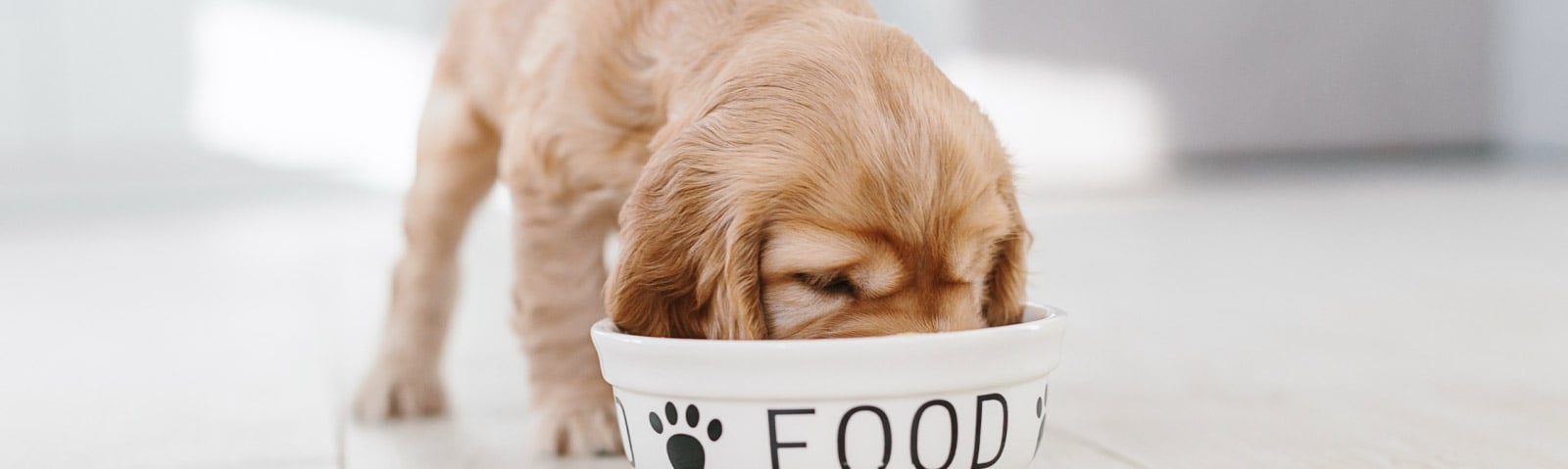
When can puppies start eating? As soon as puppies show an interest in solid dog food, they should be offered a high-quality puppy food. This is important for their growth. They are now becoming increasingly agile and have an increased energy requirement due to their rapid growth. Their protein and mineral requirements differ from those of an adult dog. A special puppy food provides young dogs with all the nutrients they need.
In addition to the composition, it is also important that the food is well tolerated, as it is not easy for a puppy's body to switch from liquid to solid food. This happens more or less automatically between the 4th and 8th week. This is because the bitch's milk production decreases more and more, so that the puppies have no choice but to turn to the food bowl. Of course, each puppy should have its own bowl so that there are no fights over the food and each dog can be monitored to see how well and how much it is eating.
How often should puppies be fed?
 Most dog owners feed adult dogs twice a day. This would be far too infrequent for a puppy due to its small stomach. In this case, the amount of food offered per feeding would be too large, so there would be a risk of vomiting. Puppies need four meals a day in the first few months of life. From the 5th month of life, this can be reduced to three feedings, and to two at the earliest at six to seven months.
However, there is also no reason not to continue with three meals a day until the dog is fully grown. There are big differences in this respect: for small dogs this can be the case at 12 months, for medium-sized dogs up to 14 months and for very large dogs only at 24 months. Up to this point, you can feed your young dog a puppy food.
How much food does my puppy need?
The right amount of food is extremely important when raising a puppy in order to achieve optimum growth. An under- or oversupply of certain nutrients can quickly lead to growth problems. If puppies are fed too generously, there is a risk that they will grow too quickly and cause serious health problems for the growing dog. Bones, joint cartilage and muscles do not develop at the same rate in this case. Your puppy should therefore be fed strictly in accordance with the feeding recommendations on the puppy food packaging. Calculate the daily ration and divide this by the number of feedings. Treats should be taken into account accordingly (for a certain amount).
Wet food or dry food for my puppy?
You can feed your puppy both wet and dry food. The choice of food should depend on the type of food the puppy has previously been fed by the breeder or the previous owner. In the delicate initial phase - after separation from its mother and siblings - there should be no change of food. Breeders usually provide future puppy owners with detailed information about the puppy's previous habits.
If you do not like the food, wait at least 14 days before changing the food and then gradually change the food over a longer period of time. Mix a slightly larger amount of the new food into the previous food every day until the change is complete after about 10 days. You should proceed in the same way when it is time to switch from puppy food to food for adult dogs.
Prepare the food yourself
It is not advisable to prepare food for a puppy yourself, as it is relatively difficult to meet the special needs of a growing dog with a home-prepared ration. This requires appropriate basic knowledge. If you do prepare the food yourself, it should be put together in consultation with an experienced vet. It is much easier and safer to use a high-quality puppy food that is precisely tailored to the needs of a young dog in the growth phase.
Checklist: Feeding puppies correctly at a glance
- Your puppy can eat special puppy food as soon as it shows an interest in dog food (from around the 4th week of life)
- Provide each puppy with its own food bowl
- Feed your puppy four meals a day until it is 5 months old
- From the 5th month of life, you can reduce your puppy's meals to three a day
- From the 7th month of life, the meals can be reduced to two - but three feeds are still possible
- Depending on the size of the dog, you can switch from puppy food to food for adult dogs: Large dogs: from 24 months, Medium-sized dogs: from 14 months, Small dogs: from 12 months
- The feeding recommendation stated on the product applies to the entire day and can be divided by the number of daily rations
- Wet or dry food? If possible, give your puppy the food to which it has been accustomed by the breeder or previous owner
- You should never change your dog's food when it has just come to you. Wait 14 days. Then you can slowly mix the old food with an increasing proportion of the new food over 10 days