

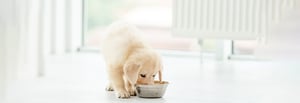
If you are planning to change your puppy's food, you should choose the right time and make the change slowly. Here are some tips to help your puppy make a successful food change.
When is the first change of food for puppies?
The first change of food takes place at the breeder. The exact time depends on the milk yield of the mother dog and the size of the litter. As soon as the bitch can no longer provide sufficient milk, the breeder must accustom the puppies to solid food. A high-quality puppy foodshould be used for this. Over the next two to four weeks, the number of meals and the amount of food offered will continue to increase until the puppy only eats puppy food.
Time of the change of food in the new home
 When the puppy arrives at its new home, you should feed it the familiar puppy food. The puppy must first get used to its new home. In the beginning, everything is new to him. It has just had to leave its mother, siblings and familiar people.
Now he needs to build up new trust and feel safe and secure. A change of food for puppies should therefore only take place after a sufficient acclimatization phase. This varies from puppy to puppy.
How long does it take to change a puppy's food?
A change of food should never be made abruptly. Changing the food too quickly could lead to digestive problems such as diarrhea. If you want to get your puppy used to a new food, this should be done slowly. It is best to mix a little of the new food with the familiar food. Over a period of two weeks, continuously increase the proportion of the new food and reduce the proportion of the familiar food. This gives the puppy's intestinal flora enough time to adjust to the new food.
5 tips for switching food for puppies
- Sufficient acclimatization time:
Give your puppy enough time to settle in with you before switching to a different food. - Carry out the change of food slowly:
To ensure that a change of food goes as smoothly as possible without causing gastrointestinal problems, it should be done continuously over a period of two weeks. - High-quality puppy food:
Always opt for a high-quality puppy food that provides your puppy with all essential nutrients. - Frequency of food changes:
When changing food, the following applies - as little as possible, as often as necessary. Do not change your puppy's food more often than necessary. - Problems when changing food:
If your puppy develops diarrhea despite all of the above precautions, you should consult a veterinarian.
Changing from puppy food to adult food
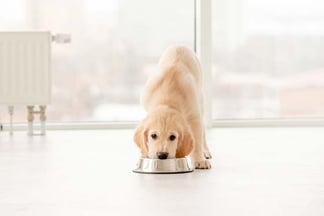 Puppies need a lot of energy during their growth phase. They get this from a high-quality complete puppy food that provides them with all the essential nutrients. Growth is particularly high in the fifth and sixth month. Depending on the breed or size, dogs grow for different lengths of time.
Small dogs are fully grown at around 10 months. Medium-sized dogs are fully grown at 12 months and very large dogs are not fully grown until they are two years old. The change from puppy food to adult food should be made accordingly. The change of food is necessary in any case, as adult dogs have different nutritional requirements to growing dogs.