

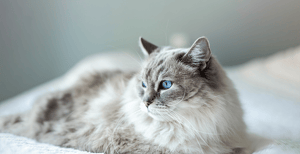
The Ragdoll is one of the largest cat breeds in the world. But it is also one of the most docile. Keeping them is therefore completely uncomplicated.
Ragdoll profile
- Size large
- Weight cat: approx. 6 kg, male: approx. 8 kg
- Origin USA
- Build massive, strong
- Coat length medium long
- Coat color 3 patterns, 20 colors
- Coat care medium
- Behavior uncomplicated, calm
- Character gentle, cuddly
Appearance and character of the Ragdoll
If you compare a Ragdoll with a Siamese cat, for example, it becomes clear how large this cat breed is: while a male Siamese weighs a maximum of 5 kilograms, male Ragdolls can weigh up to 10 kilograms. From the tip of the nose to the tip of the tail, some specimens reach a length of 120 centimetres. Their opulent coat contributes to their impressive overall appearance. It is of medium length, very soft and dense. It feels like silk and is longest at the neck, giving the impression that they are wearing a bib. The coat has a wide variety of colors: The Ragdoll comes in colorpoint, mitted and bicolour patterns. There are also 20 different colors, such as seal, blue, chocolate, purple, red and cream. Due to the possible combinations, there are 60 different color varieties of the beautiful Ragdoll.
The character of this cat breed is also impressive. It is so devoted and trusting that its name is derived from this: Ragdoll is the English name for a rag doll. Just as a ragdoll can be picked up at any time without any problems, this can also be the case with a Ragdoll. She has complete trust in her humans and loves to be carried around and stroked. She also has no problems with conspecifics or other pets. In general, she is very gentle, uncomplicated and calm. She is not conspicuous, but due to her close relationship with her humans, you should always expect her to follow you and suddenly stand right next to you.
Ragdoll cat: keeping and care
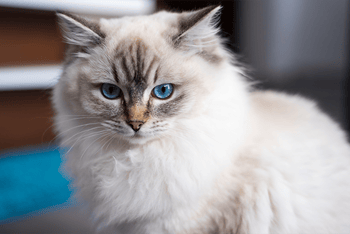 Due to their uncomplicated nature, keeping a Ragdoll does not present any special challenges. It is neither one of the noisy breeds nor one of the constantly demanding breeds, such as free-range cats. The view from a secure balcony is enough for them; going outside is too risky for most Ragdoll owners. Not only because they are endangered by road traffic, but also because of their trusting nature, which could lead to them wandering in somewhere without a care in the world and not getting out again. It is safer to offer them a varied territory in the home. It should not be forgotten how large this breed is. A small, wobbly scratching post does not meet their requirements. Everything should be big enough - and in the case of a high scratching post - sturdily attached. When a 10-kilogram male is in a playful mood, this can be quite a challenge for the equipment. Especially if you have two or more cats. A single cat is only recommended for people who are prepared to spend a lot of time with them and are not regularly away from home for long periods.
Although grooming is much easier than with a Persian cat, it is not quite as easy as with a shorthair cat. Ragdolls are one of the cat breeds with medium-length fur. To avoid matting, they should therefore be combed two to three times a week. If the coat changes twice a year, daily combing is recommended. This has many advantages: less cat hair flies around the home, the shedding process is quicker and less complicated and there is less risk of the cat swallowing too much hair when grooming. If too much hair accumulates in the gastrointestinal tract, constipation can be the result.
Nutrition
Whether kitten, adult cat or senior - the food for a Ragdoll should always be of high quality and adapted to its age. Cats are carnivores by nature, so the cat food should contain a high proportion of meaty ingredients. Sugar, flavor enhancers and artificial colors and preservatives should not be added to the food.
animonda offers the right food for every stage of your cat's life. Choose between kitten, adult and senior food. The products are specially formulated to meet the particular nutritional requirements of the different life stages of cats. This creates the best conditions for a healthy and long cat life.

Ragdoll cat health
The Ragdoll is a robust breed of cat, and not just from the outside. They live to be 12 to 15 years old on average. However, as with all breeds, hereditary diseases cannot be ruled out. One of these is hypertrophic cardiomyopathy (HCM). This is a heart disease characterized by a thickened heart muscle and an increasingly smaller interior space of the heart. This causes the heart to beat faster, which can lead to breathing problems, reluctance to eat and water retention in the lungs, among other things. Medication can help to a certain extent, but it is more important that the disease is prevented. This is possible with a genetic test. These are also available for other cat diseases such as polycystic kidney disease. Likewise for viral diseases such as feline aids (FIV) and FeLV (Feline Leukosis Virus).
Responsible breeders have genetic tests carried out on all breeding animals and exclude affected cats from breeding. Therefore, if you are interested in this cat breed, look for a reputable breeder who can provide proof of genetic testing and vaccinations on the basis of health papers.
History and breeding
In the 1960s, the American Ann Baker became aware of her neighbor's litter. Her Angora cat had produced particularly large kittens with long fur and beautiful blue eyes. She wanted to create her own breed from them, which is why she decided to buy a kitten and start breeding with other unknown animals. She stood in her own way to quick success because she had her breed patented and only allowed buyers to continue breeding if they purchased a license. This was not everyone's cup of tea. Disagreements arose, as a result of which some breeders parted company with her, but probably continued breeding nonetheless. They played a large part in ensuring that the breed did not die out long ago. They were not dissuaded from breeding when Ann Baker had the name "Ragdoll" copyrighted in 1975, as they had already used it before. However, new breeders could not use it without permission until 2005.
The Ragdoll has been recognized by the American umbrella organization CFA since 1965. Due to the difficulties associated with breeding, its spread was slow. In 1991, however, it was also recognized by the European breeding association FIFe. Although the Ragdoll is not one of the most frequently bred and kept breeds, it has since achieved considerable popularity.