


A species-appropriate diet has a major influence on a cat's health. We will show you some tips on how to feed cats properly.
How much food does my cat need?
The daily amount of food a cat needs depends, among other things, on its age, whether it is kept indoors or outdoors and its temperament. A very calm cat has a lower energy requirement than a very agile cat. To determine the correct amount of food, it is advisable to follow the feeding recommendations on the cat food packaging. However, it is important to remember that the feeding recommendation is only an average value. Feeding should therefore be individually adapted to each cat.
How often should I feed my cat?
A cat that hunts for its own food often eats small amounts more than ten times a day. Figuratively speaking, you could say that it is certainly not wrong for cats to have free access to food throughout the day in order to eat small portions. However, this free access to food unfortunately leads to obesity in a large number of cats. To enable cats to eat small portions throughout the day at home, it is advisable to feed them a combination of wet and dry food. The wet food can be offered in the morning and/or evening, while the weighed amount of dry food can be freely available throughout the day. Once the dry food has been eaten, it should not be refilled.
Caution when changing food
The first change of food can often occur when the cat moves into its new home. However, this change of food should be avoided if possible so that the cat can get used to the new environment. A change of food should take place after one to two weeks at the earliest. The best way to get your cat used to a new food - regardless of age - is to be as gentle and careful as possible: a small amount of the new food is mixed well with the previous food. The proportion is gradually increased until finally only the new food is left in the bowl.
Wet food or dry food
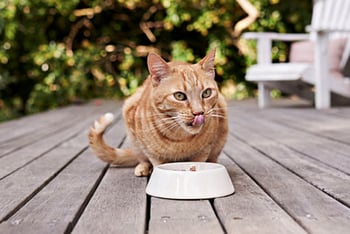
In principle, a cat's nutritional requirements can be met with wet and dry food. However, if only dry food is fed, care must be taken to ensure an adequate supply of water. As former desert animals, cats drink very little and cover a large part of their fluid requirements through their food.
With wet food, fluid intake is optimally supported. With dry food, however, this is only possible to a limited extent. To encourage your cat to drink, it is advisable to have several water bowls and/or a drinking fountain in the home.
No dog food for cats
Cats should not eat dog food. As strict carnivores, cats have different food requirements to dogs. For example, cats need more protein than dogs. Cat food also contains the essential taurine, which cats, unlike dogs, cannot produce in sufficient quantities themselves.
Food aversion
If a cat does not eat its food, there are a number of possible reasons for this - including food aversion. This can occur, for example, if the cat has been ill and was given a certain food at the time. After the cat has recovered, the negative impression of the illness may be associated with this food, causing the cat to reject it.
Feeding cats correctly
In addition to the food, the environment in which the cat eats is also very important. Cats like to eat in peace and quiet. Place your cat's food bowl in a quiet place. The temperature of the food is also important! The food should always be fed at room temperature. Food that is kept in the fridge must be taken out in good time before feeding. Otherwise, you should make sure to offer your cat a high-quality complete cat food, as this is the foundation for a long and healthy cat life, such as animonda Carny.