
A regular daily routine is important for both puppies and adult dogs. It gives them security and ensures peace and relaxation. A typical daily routine could look like this.
Daily routine with a puppy
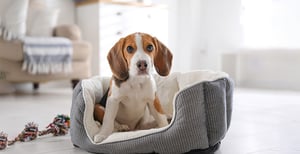
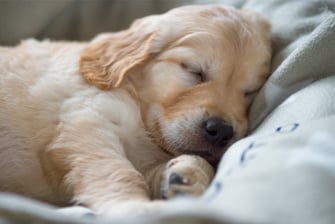 A puppy's daily routine is very different from that of an adult dog. This can be seen, for example, in the daily need for sleep: while puppies need 20 to 22 hours of sleep, the period for adult dogs is around 16 to 18 hours. These rest periods are important in order to process experiences and recharge their batteries. This is why puppies should always be able to sleep in. After each sleep phase, the puppy should have the opportunity to relieve itself. For example, a puppy will quickly need to go to the toilet five to ten times, whereas an adult dog may only need three. The situation is similarly different when it comes to feeding: in the first few months of life, puppies need food around four times a day. From the fifth month onwards, they can be fed three times a day. Most adult dogs, on the other hand, are fed twice a day.
Sleeping and eating take up a lot of time - but puppies are all the more active during their waking phases. They romp around, want to play, discover new things, perhaps get to know other puppies and build up an intensive relationship with their humans. Support your little one in this and take enough time for it, because now is the imprinting and socialization phase. However, puppies should not be overtaxed during this phase, but should still be exposed to as many new things as possible. The more versatile they are prepared for life, the easier it will be for them later on.
Daily routine of an adult dog
Some dog owners let their dog out in the garden or go for a short walk before the first meal in the morning. Others give their dog his food first before going for a longer walk. Depending on how urgent the dog is in the morning, this can be done in one way or another. If the dog is then left home alone, the walk should be as long and varied as possible. The more exercise the dog has had and the more exhausted he is, the easier it will be for him to stay indoors on his own afterwards. With sufficient acclimatization, an adult dog can stay alone for four to five hours. It should never be more than that.
After a rest period in the morning, the dog will be happy to have a change in the afternoon. Set aside enough time each day for playing together , going for walks, grooming or simply cuddling. Dogs are very social animals, which is why closeness and affection are just as important to them as sufficient activity. This doesn't always have to be in pairs; when you're away, your four-legged friend will also be happy with a chew bone or a smart toy. In the late afternoon or evening, it's time for the second meal. Afterwards, they should rest a little before another walk rounds off the day.
Can you have a dog when you work?
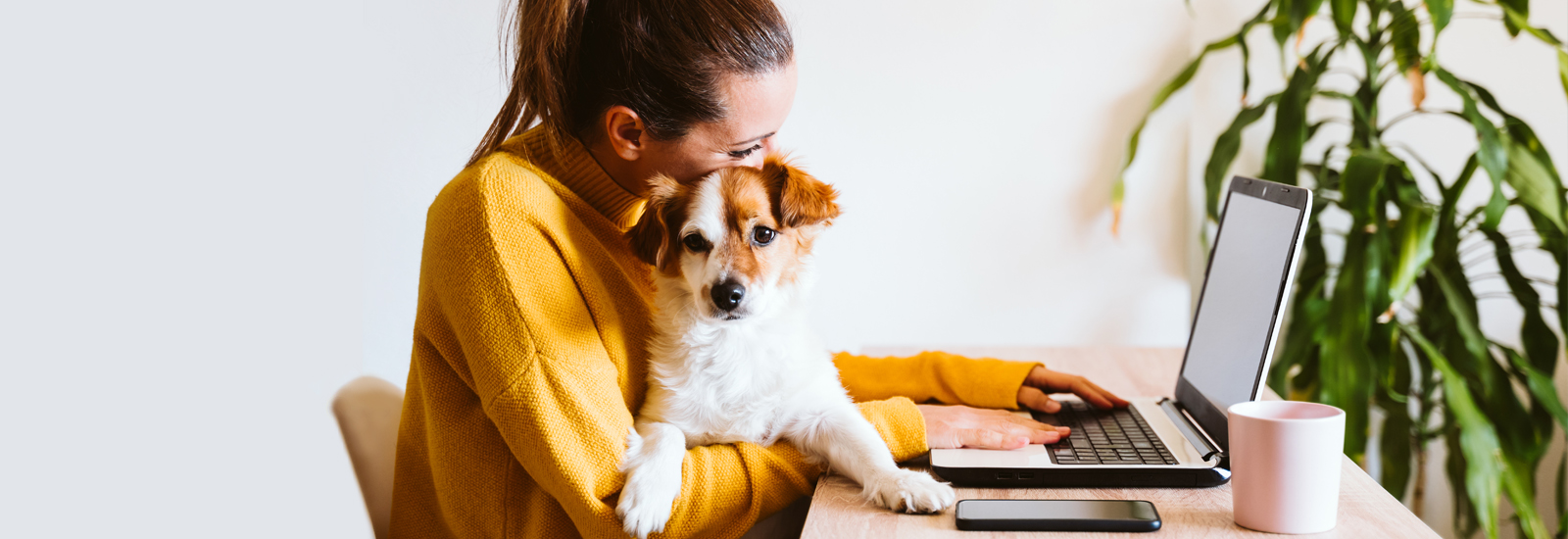
The best thing for a dog would be if it could spend the whole day with its owner. He would still withdraw from time to time, but he would know that someone would always be there for him. He wouldn't mind accompanying his owner to work either. But this is not always possible. However, more and more companies are now allowing dogs to come into the office with them. However, this is only possible if the dog is very well behaved.
Otherwise, the only option is to gradually get the dog used to being left alone. This should already be started when the dog is growing. Increase the time from a few minutes onwards. In this way, a dog can learn to stay alone for several hours. If you have a full-time job, you must come home for at least an hour at lunchtime and walk the dog. Alternatively, you can hire a dog sitter.
When is the best time to feed my dog?
You have several options for an adult dog. Some dog owners opt for a single feeding. However, a single feed per day is not recommended for large dogs, as they would then have to eat an enormous amount of food. Not only does this mean that the digestive organs have to process a lot in a short space of time, but it also increases the risk of gastric torsion. It is therefore advantageous to divide the daily ration into at least two or even three portions. This is particularly recommended for older dogs or dogs with digestive problems.
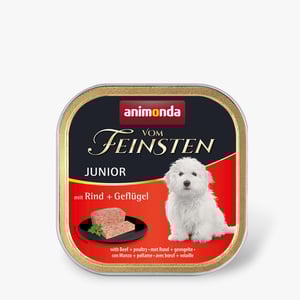
With a puppy, you have to adapt your daily routine much more to the needs of the young dog. They cannot yet be left alone for hours on end or go without food for long periods of time. The younger a puppy is, the more often it needs food: up to 5 months of age, the puppy should be fed four to five times. From the age of five months, this can be reduced to three feedings and at six to seven months at the earliest to two feedings. Growing dogs need a balanced complete food for young dogs, which provides the little one with all essential nutrients. As soon as they are fully grown, you should switch to a complete adult food. This will ensure that your dog is always fed according to its age.