


Aggressiveness in itself is important for many animals in order to survive. Therefore, threatening gestures towards other dogs are perfectly normal and therefore acceptable. However, if a dog overdoes it, the cause must be found and a solution worked on.
Aggressive behavior is normal
Aggressive behavior is completely normal in wild animals. It is a decisive factor in who survives. Only those who can assert themselves get enough food, a good place to sleep and can pass on their genes. However, care is almost always taken not to injure conspecifics unnecessarily. At first they only threaten. This behavior is often enough to make an opponent understand who is in charge or what they want from the other.
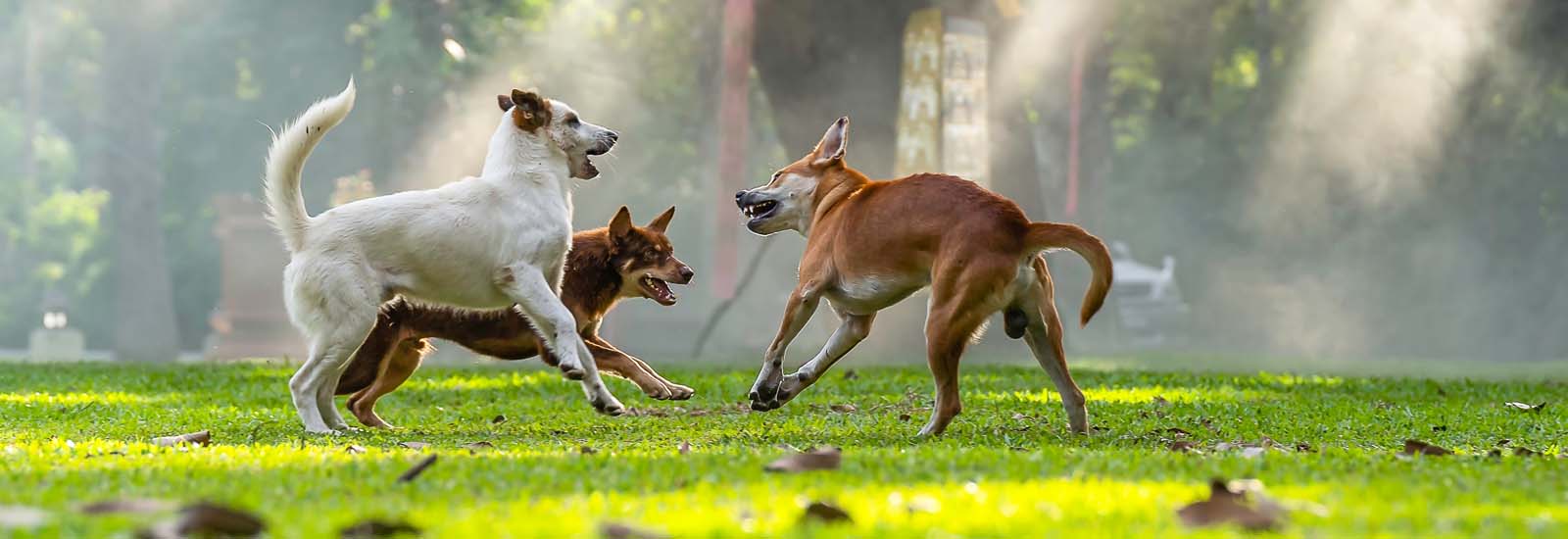
This behavior is still present in dogs even after a long period of domestication. When dogs meet, they often make threatening gestures such as growling, raising their lips, fixing their gaze or showing off. This threatening behavior should never be punished. It is a warning to avoid a really aggressive confrontation with another dog. If these warning signals are stopped, a dog could attack immediately the next time.
Why is my dog aggressive?
A distinction must be made as to whether a dog is merely threatening another dog to make it understand that it should keep a certain distance from it, or whether it is really aggressive and there is a risk of biting. If the latter is the case, it is important to find the cause. Possible causes include
- Insufficient socialization
During puppyhood, it is important that the dog gets to know many situations and memorizes them as everyday and harmless. This includes other people, animals and everyday situations. If the dog does not get to know screaming children, large men, vacuum cleaners, baby carriages, bicycles or teenagers on skateboards, it will react insecurely. If he feels threatened by them and is not given the opportunity to get used to them, he may react aggressively. - Bad experiences
You don't know what any dog you take in has experienced so far. This is especially true for dogs from animal shelters. But even a puppy that has been cared for by a breeder may have had bad experiences. Perhaps it has been teased by children or frightened by someone at the garden fence. Many things can happen to dogs from abroad: They may have been kicked, had stones thrown at them, had to fight for food resources or been bitten by another dog. This all shapes an animal and can make them feel threatened in certain situations and ready to fight for their lives. - Neglected training
The best conditions for relaxed coexistence can be created with good socialization and training of the dog. Don't miss out on puppy play lessons at a good dog school and, ideally, a basic training course afterwards. Even if the dog does not immediately learn to "sit" and "stay" , it will certainly have learned a lot. First and foremost, how to deal with other dogs.
You should not let the training slide afterwards. Don't forget that you are the pack leader. A dog is quite willing to be subordinate, but you must always demand commands consistently and not simply ignore them. - Pay attention to your own behavior
If you pick up a small dog every time you see an oncoming four-legged friend or always change sides of the road to avoid an encounter, your dog cannot learn social skills. The same applies if you are unsure yourself and your body language signals to the dog that an oncoming dog should always be viewed with suspicion. Be a confident pack leader who has the situation under control. Otherwise your mood could be transferred to the dog on the lead and so-called leash aggression could occur. - The dog is ill
It is rather unlikely, but cannot be ruled out, that the dog is ill or in pain. This can lead to him wanting a greater distance than usual from other dogs and showing aggressive behavior at an early stage.
How can I recognize aggressive behaviour?
There are various forms of aggressive behavior. In order to be able to recognize this at an early stage and intervene accordingly, the dog should always be observed closely. The following signs can be assigned to aggressive behavior:
- Snarling
- Raised ears
- Growling
- Raising the lips
- Focused gaze
- Raised back fur
- Mock attack
- Showing off
- Stiff / rigid posture
- Snapping into the air
- Raised tail
What to do if the dog is aggressive?
It is important to find out the reason for the aggressive behavior, because what to do depends on this. It is possible that the dog does not see you as the pack leader and therefore feels compelled to resolve certain situations itself. In this case, you should make it clear to him through your appearance and consistent training that you are in charge and that he can "relax". Neutering may also be helpful for male dogs. However, this is by no means a panacea. It only influences the behavior associated with the sex drive. It cannot compensate for a lack of training or a lack of pack structure.
It is also possible that the dog has too little experience in dealing with other dogs. If you have not attended dog school and only rarely or never let him play with other dogs, then he does not know enough about how to behave towards other dogs and how to assess them. In this case, it would make sense to look around for a good dog school. This also applies if you are at a loss as to what could be causing the aggressive behavior. Get help before the situation gets any worse. An outside perspective can be very helpful. Experienced dog lovers may also be able to give you tips, otherwise look for a dog psychologist or dog trainer who is familiar with aggressive dogs.
It is also important not to deliberately put the dog in stressful situations again and again in the hope that he will get used to it over time. Such a procedure must be carried out very carefully. Make an effort to recognize possible aggressive behaviour at an early stage and prevent the dog from getting into a critical situation in the first place. Discuss your individual problem with an expert and work out a training plan together that is tailored to your dog's specific problems. You should be patient, as aggressive behavior cannot be stopped overnight. However, the first step towards improvement is taken when you are aware of the problem and work actively and consistently with your dog to find a solution.