

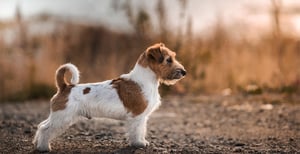
Back problems are relatively common in dogs. As they can be very painful, they should be recognized and treated in good time. Dog owners can also take preventative action.
Causes of back problems in dogs
Back pain doesn't just plague many people, dogs can also suffer from it. It is caused by changes in the bones or muscles. The reasons for this are very varied and should be clarified by a vet. The causes of back pain in dogs can include the following:
- Breed-related
Dogs with a long back are particularly at risk of back pain. It is not for nothing that a slipped disc is also referred to as dachshund paralysis, as dachshunds are more frequently affected. However, back problems are also known to occur in bassets, Pekingese, Lhasa apsos, terriers, corgies, spaniels and French and English bulldogs. However, not only small dogs but also large dogs can suffer from back pain. This can be caused by an unstable lower cervical spine. The so-called Wobbler syndrome occurs in Great Danes, Dobermans and Rottweilers, among others. - Scent
If dogs have a short coat, such as Boxers, Dobermans, Greyhounds or Pharaoh Hounds, and have little or no undercoat, they are significantly more sensitive to the cold than their furry counterparts. One particular example is naked dogs, which are predominantly hairless. Not only does this mean that dogs with little or no fur can freeze more quickly and contract an infection, but it can also cause back problems. - Overloading
Exercise is good for both humans and animals, but only up to a certain limit. Particular care should be taken with puppies and young dogs. Only when they are fully grown will their skeleton be sufficiently mineralized and thus hardened and ready for greater strain. Even then, however, consideration must be given depending on the breed of dog. By no means all dogs have the right prerequisites for running longer distances alongside a bicycle, for example. In addition, breeds that are known to have back problems should avoid frequent climbing of stairs, jumping into the car or onto the couch, as well as high-impact dog sports. - Organ disease
In the case of back pain, organ disease should also be considered. If, for example, there are kidney, bladder or gastrointestinal problems or a disease of the prostate or uterus, the pain can radiate into the back and lead to tension. - Diet-related
With home-cooked or home-mixed rations, an excessive supply of vitamin A can lead to joint stiffness in the area of the cervical spine. This is known as ankylosis . An inadequate supply of calcium or vitamin D leads to insufficient mineralization of the bones. Jerky movements or falls can then lead to fractures in the cervical spine, the pain from which can also radiate into the back.
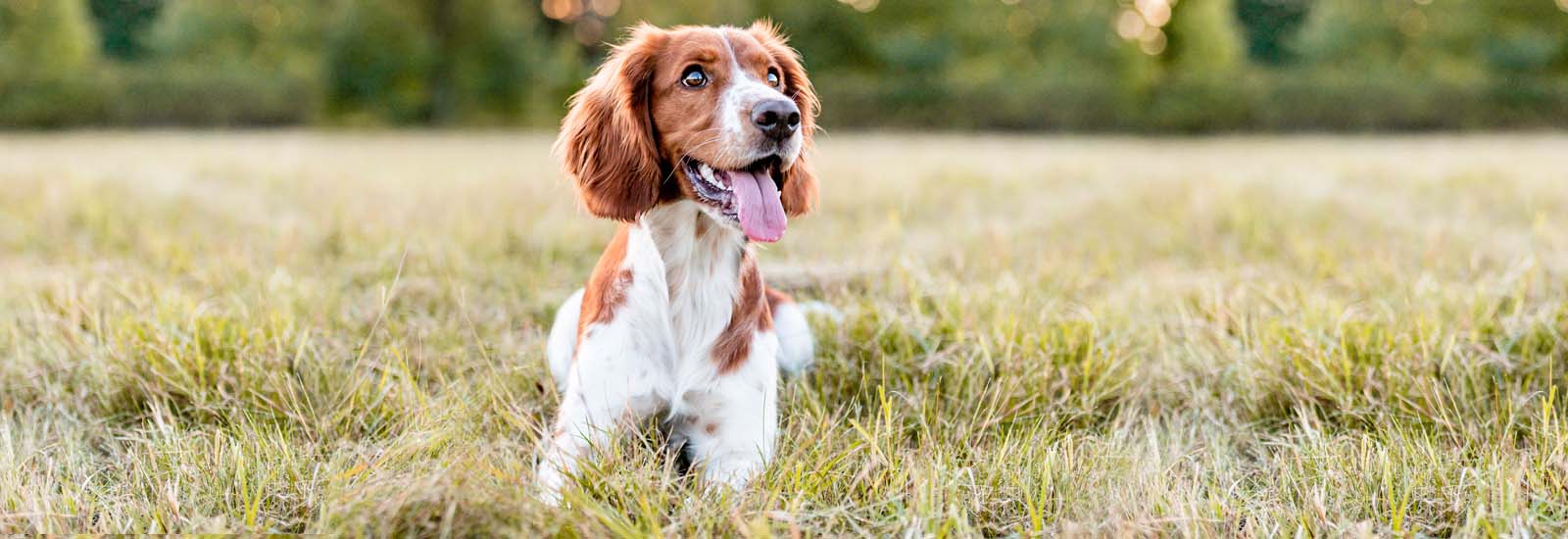
Symptoms of back pain in dogs
When dogs have back problems, they can be very painful. A vet should therefore be consulted as soon as possible. The following symptoms can indicate back problems in dogs:
- curved back
- twitching when the back is touched
- reduced activity
- movement disorders
- nibbling of joints
- crying out when moving
- signs of paralysis
- Paw dragging
- Problems defecating
- Incontinence
- Trembling in the legs
- Unstable stance
- difficulty getting up
- Avoidance of jumping
- changes in behavior
Diagnosis and treatment of back problems
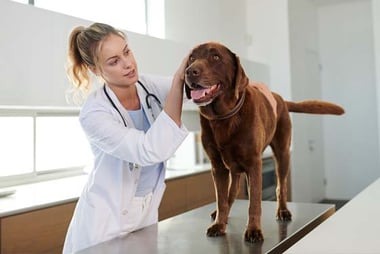 Due to the many causes that can be responsible for back problems in dogs, a thorough diagnosis should be made by a vet. In addition to a thorough general examination, information from the pet owner can also be useful. The vet will then decide how to proceed. A so-called lameness examination is common. Here the vet looks at the dog's gait. In order to confirm any suspicions, an X-ray diagnosis is then usually required. It may also be necessary to carry out neurological examinations. Computed tomography or magnetic resonance imaging cannot be ruled out either.
The treatment depends on the diagnosis. The aim is always to prevent the disease from progressing. Some diseases can be completely cured, while others can only be slowed down or pain alleviated. This includes spondylosis, for example. This is a wear and tear of the intervertebral discs and ligaments in the spine. As a result, the body tries to give the spine stability by building bony bridges over several vertebral bodies.
If the spine bends and these bony bridges rub against each other, this can be very painful. Spondylosis cannot be cured, which is why good pain treatment is important in the first instance. This is also referred to as symptomatic therapy, i.e. only the symptoms are treated, while the actual cause is incurable. Inflammatory processes should also be kept in mind. An operation on the spine is usually only considered if, for example, the spinal canal is narrowed and the spinal cord is squeezed, resulting in paralysis.
Relief and prevention of back problems
Both with the diagnosis of "spondylosis" and with many other diseases that cause back pain, the aim is to alleviate the symptoms and, if possible, prevent them in the future. There are a few things you can consider in your dog's everyday life:
- Weight of the dog
The more weight the dog has to carry around, the greater the strain on the back. Therefore, make sure that the dog is not overweight. This may be due to too many treats or too much food. Talk to your vet to see if they can advise you on a diet food for dogs (e.g. an obesity diet). - Restrict exercise
If a dog has back problems, it should no longer have to perform strenuous exercise. This may include jumping into a car or frequently having to climb a lot of stairs. Depending on the size of the dog, you should lift it into the car, use a ramp or look for other options or carry it up the stairs. He should also only do limited exercise. This includes repeatedly chasing after a ball, obstacle jumps in agility, frisbee or running long distances next to a bicycle. Also limit wild play or romping around with other dogs. - Where the dog lies
The dog bed should not be in a draughty place. It should also be sufficiently well protected against the cold ground. A certain level of comfort is also important. The dog bed should also be of a sufficient size so that the dog does not have to bend its back unnaturally. Orthopaedic dog beds are often very suitable. - Harness instead of collar
A collar can put increased strain on the cervical spine, especially if the dog is constantly pulling or if you are often forced to keep the dog shorter. In this case, a harness that fits well is much more gentle. If the problems are more in the back area, a wide, well-padded collar is recommended, as a harness rests partly on the spine. - Versatile treatment options
In addition to conventional medicine, homeopathic treatments or physiotherapeutic measures are also very promising. These include massages, heat treatment or the use of an underwater treadmill. - Adapted walks
Humid fall days and cold winter days are not conducive to back problems. However, walking is of course still necessary. However, the walks should be a little shorter and without long breaks during which the dog could cool down. To avoid this, a dog coat is also recommended, depending on the breed. If the dog does get wet, it should be dried off at home or blow-dried.