

Your dog is scratching, his skin is showing noticeable changes and you are wondering what is behind it? Itching can be a sign that your pet is suffering from a food allergy. An exclusion diet under the professional guidance of your vet will help you to find out which food ingredients your four-legged friend cannot tolerate.
Our animonda veterinary specialist for animal nutrition and dietetics, Dr.Simone Radicke, reveals what you should look out for when carrying out an elimination diet for your dog.
Find out in the animonda interview:
-
how a food allergy manifests itself in dogs
-
how food intolerances develop in dogs
-
whether an allergy test makes sense
-
how to carry out an elimination diet for your dog
-
which dog food is suitable for the elimination diet
-
for how long an elimination diet should be followed
-
when your dog should feel better after the change of food
-
how a provocation test works
Food allergy in dogs: symptoms & triggers
animonda: How does a food allergy manifest itself in dogs?
Dr. vet med. Simone Radicke: Primarily through itching. This occurs at all times of the year and is not limited to spring or summer. In addition to itching, diarrhea can also occur. If a dog has skin changes that become bloody and crusty when scratched, you should definitely consult your vet . He is the only one who can diagnose a food allergy, as an infestation with fleas or mites, among other things, must be ruled out.
Because: itching can have many causes. Often only the ears are affected in dogs, so an ear infection can also be an indication of food intolerance.
animonda: How do food intolerances develop in dogs?
Dr. vet med. Simone Radicke: Food allergy is an overreaction of the immune system to ingredients in the food. These can be animal or vegetable proteins, and beef and dairy products in particular are proteins that often trigger food allergies in dogs. In principle, a food allergy can occur at any stage of a dog's life. Studies have shown that 48 percent of dogs with a food allergy were even younger than one year old.
animonda: As a dog owner, should I have an allergy test carried out by a vet?
Dr. vet med. Simone Radicke: No. An allergy test is not reliable for food intolerances. In this case, the diagnosis can only be made through an exclusion diet.
What you should know as a dog owner
 animonda: My dog is suspected of having a food allergy. Will my vet prepare an elimination diet for my dog and what would it look like?
Dr. vet med. Simone Radicke: In order for an elimination diet to be drawn up, the vet must get an idea of the previous feeding. He must always consider the dog's individual situation: What has he eaten in the past and what hasn't he eaten yet? After this detailed assessment, the vet will suggest a ration consisting of components that have not or only rarely been on the dog's diet - such as raw materials from horses.
You can either prepare this exclusion diet yourself or use an industrially produced complete food.
animonda: How do I do an elimination diet with my dog and what everyday situations do I have to pay particular attention to as a dog owner in order to successfully carry out the elimination diet?
Dr. vet med. Simone Radicke: An elimination diet is usually fed for 8 to 12 weeks. It is important that the dog is not given any other food, snacks or dental care products. Unfortunately, snacks or chew sticks in particular are not consciously perceived as food, which is why the vet will point out this common mistake. Even small amounts of other food can cause the dog to scratch again.
If there are several dogs in the household, all animals should be fed separately during the exclusion diet. If other medication needs to be administered, this must be discussed with the attending vet. He can give specific tips.
animonda: Do you recommend a diet diary to record the results of the dog's elimination diet?
Dr. vet med. Simone Radicke: Yes, I definitely recommend a diet diary. It helps immensely to carry out the elimination diet safely and also to be able to answer any questions the vet may have. Everything your dog is offered and by whom should be recorded in the diet diary. This includes all family members and friends.
The diet diary should also record whether your dog has walked off the lead. And if this is the case, whether there was an opportunity to eat outside.
Elimination diet: Feeding tips for your dog
 animonda: Which dog food is suitable for an elimination diet?
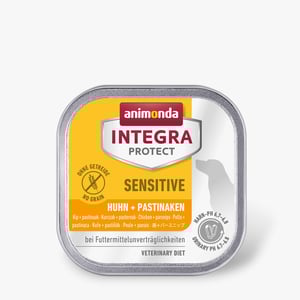
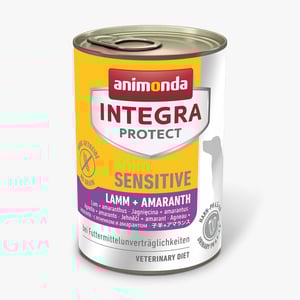
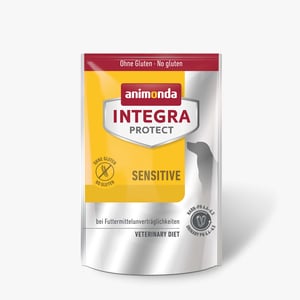
Dr. vet med. Simone Radicke: Wet and dry foods with a selected animal protein and carbohydrate source, such as Integra Protect Sensitive , are perfect for the elimination diet. As the food contains only one source of animal protein, allergic reactions to the protein in question can be easily identified. Possible protein-carbohydrate combinations are, for example, horse with amaranth or chicken with parsnip.
animonda: Cooking your own food or using store-bought dog food for the exclusion diet - what do you recommend at this point?
Dr. vet med. Simone Radicke: I can't give a general recommendation here, as the individual requirements and previous feeding of the dog must always be considered. As far as possible, I would always go for a wet or dry food, as it is easier to handle in everyday life.
animonda: How long should I feed my dog the elimination diet?
Dr. vet med. Simone Radicke: The elimination diet must be fed for at least 8 weeks. Sometimes, however, it can take up to 12 weeks. If the itching or diarrhea has not improved after 12 weeks, the elimination diet must be restarted with other animal ingredients.
animonda: Is a successful elimination diet the same as a diagnosis of food allergy?
Dr. vet med. Simone Radicke: Unfortunately not yet, because a reliable diagnosis can only be made by means of a provocation test.
animonda: I fed my dog strictly according to the exclusion diet for the recommended period of time. How is the provocation test carried out correctly in order to get definitive clarity about my dog's food allergy?
Dr. vet med. Simone Radicke:In order to trigger the provocation in the dog, individual ingredients that are thought to have caused the allergy are specifically added to the elimination diet. For example: If chicken was fed in combination with rice during the elimination diet, I can now add ingredients from beef if I assume that the allergy was caused by beef. I am therefore now feeding beef ingredients for three days. If the dog reacts to this, beef is a trigger for the food allergy. If he does not react with diarrhea or itching, my dog is not allergic to beef.
animonda: What do I have to consider in the future if the provocation test shows that my dog suffers from a food allergy to certain proteins?
Dr. vet med. Simone Radicke:If the elimination diet was successful and the allergy-causing protein has been identified, I can continue to offer the elimination diet. If it is a commercial elimination diet (wet or dry food), this can continue to be fed without any problems, as this food contains all the essential nutrients that the dog needs on a daily basis. It could be more complicated for the dog owner if the dog has been fed a home-prepared elimination diet with very rare proteins - for example, goat or antelope - as it is likely that vital minerals and vitamins have not yet been added to this preparation.