

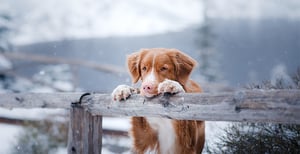
To ensure that dogs get through the winter perfectly, there are a few things to consider when it comes to optimum equipment, care and nutrition.
When winter approaches
At the latest when the clocks change from summer to winter time, walks now take place more frequently in the dark. Many dog owners are well prepared for this and bring out their reflective leads and/or luminous collars . This purchase can only be recommended to every dog owner. Not only does it make other people aware of your dog, but it also gives you a safer feeling that you have your dog in sight at all times.
Help with shedding
When winter is approaching, many dog owners have to change their pet's coat. They lose their summer coat before winter and put on a thick winter coat. For some dogs this is not a problem, for others it is a real burden. Depending on age, breed and coat condition, shedding can be relatively stressful for the dog. In this case, it is not only helpful to provide the dog with high-quality food that supplies it with all the important nutrients, but also support from the dog owner. Dogs with a thick undercoat in particular should now be combed or brushed daily so that the change of coat goes as quickly and smoothly as possible.
Well equipped for the winter
Huskies, Spitz and Newfoundland dogs are well equipped for the cold and snow with their coats. The situation is different for boxers, Dobermans and greyhounds. Dogs with short coats and little undercoat freezemuch faster, especially if they are small and therefore cool down more quickly. A dog coat is recommended for them in bad and cold weather.
Paw care for dogs
The paws are the dog's most important direct connection with the environment. This is why paws should be checked regularly, especially in winter, to detect injuries. Salt, ice and grit are a constant burden and can visibly damage the pads. To protect them, a special paw ointment for dogs is recommended, which provides a natural protective layer. Vaseline and milking grease are only suitable to a limited extent.
If snow has fallen, paws should be washed briefly with lukewarm water after a walk to remove any road salt. Also check whether there are any lumps of ice between the pads. These can be carefully loosened. If the paws are cracked, they should be creamed again after the walk.
Snow is fun for dogs
Some dogs don't enjoy the snow very much and don't like going for walks. However, the vast majority of dogs really enjoy romping around in the snow. This is easy to understand with young dogs, but even older dogs can be tempted by snow. They will happily run across snow-covered meadows, stick their noses in snow holes or catch snowballs. However, they should not eat the snow. This could lead to abdominal pain, diarrhea or vomiting. Depending on the severity of the symptoms and the condition of the dog, a vet may need to be consulted. In the case of a minor stomach upset, a day of fastingfollowed by a light diet is sufficient.
Leisure tips for on the go
When dogs feel snow under their feet, they are often so busy that there is no need to provide any variety. This is especially true when several dogs play together in the snow. Some, however, need a little help - for example with a search game. However, it is better not to use a stick lying around, as there is an increased risk of these splintering and causing injuries to the mouth, especially in winter. A ball is better suited for this! Or hide a few treats in the snow. Not only is this fun for many dogs, but it also challenges them physically and mentally.
If you are looking for leisure tips beyond winter walks with an active dog, you could take him cross-country skiing, for example. You should use cross-country ski trails for which a dog permit has been issued. It is important that the dog quickly learns to run alongside the trail. Before he has learned this, it is better to avoid "normal" trails.
Tips for at home
In winter, it is normal to spend more time indoors with your dog, as rain, cold, ice and snow generally mean that walks are shorter. Winter is ideal for refreshing some commands or practicing tricks. Just give it a try! In addition to basic commands such as "sit", "stay"and "down", you can also rehearse "do a little man", "give paw" or "turn".
As a result, many dogs have already acquired a taste for this sport and have signed up for dog dancing next spring. Many dogs love this sport because it not only allows them to show what they can do, but also gives them the full attention of their owner.
.jpg?width=300&name=82730-animonda-GranCarno-Adult-Multifleisch-Cocktail-Hund-Nassfutter_1920x1920%20(1).jpg)

