

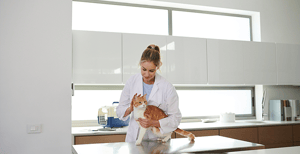
It's not unusual for your pet to be a little shy of the vet, but you shouldn't panic. We have put together a few tips to make your next visit to the vet more relaxed.
Visiting the vet with a cat
If you listen to the stories of cat owners about visits to the vet, they vary greatly. While some have hardly any problem with it, for others it becomes an ordeal: the cat flees to the furthest corner of the apartment as soon as it sees the transport box. Catching the cat is therefore associated with major problems. The already stressed cat then has to endure an unloved car journey and then possibly endure the time until the vet appointment in a packed waiting room. The vet then dares to touch the cat, which is immediately met with hissing and scratching . Back at home, the cat is angry for days and you can only hope that there won't be another appointment so soon. But a visit to the vet doesn't have to be like this. There are many ways to make this much more relaxed!
What do I do if the cat doesn't want to go into the box?
To take a cat safely to the vet, a transport box is recommended. However, this should not be taken out of the cellar an hour before the appointment, but should be used all year round or at least regularly for shy animals. Set up an additional cuddly cave for your cat here. Furnish the box with a blanket and toys and hide a treat in it from time to time. Leave the hatch of the transport box open so that the cat can go in and out at any time and thus lose its shyness.
Especially with kittens, it is worth getting them used to the box right from the start. It should become a familiar piece of furniture with which the cat associates positive things. So always praise it when it goes in voluntarily. This is also a good time to close the flap from time to time. First just a few seconds, then longer and longer. If this works, the next step is to carry your cat around the house in the closed box. Don't forget the reward and slowly increase the amount of time.
Traveling with your cat in the car
When your cat is getting used to the box, take it to the car occasionally. Attach it to the back seat and, depending on the situation, decide whether this is enough for now or whether you want to take it for a short spin. Under no circumstances should the first car journey take you to the vet. Just go for a spin and carry the cat back into the apartment. Even if this may seem a little strange to you, a smooth car journey is one of the most important prerequisites for a stress-free visit to the vet.
Preparing your cat for a visit to the vet
Some cats don't like being touched by the vet at all. On the one hand, this is of course due to the fact that it is a stranger, but also because of the unfamiliar touch. The vet wants to look into the cat's mouth, ears, perhaps feel its belly or lift its tail. The cat is not used to all this from us. It is therefore worth practicing and rewarding this occasionally. The vet will certainly appreciate this.
In this respect, some vets have no problem if you drop by with your cat on a trial basis and sit in the waiting room for ten minutes. Or there may even be time to go into the consulting room with your cat for a few minutes. Anything she has already experienced and doesn't immediately associate with anything negative can be beneficial for a future visit to the vet.
Well organized to the vet
The influence you have on your cat should also not be underestimated. If you travel to the vet in an unorganized and rushed manner, you should not be surprised if your own tense mood is transferred to your cat. It is therefore important to prepare everything in good time. Have the vaccination certificate and any documents ready, make sure you have enough treats, prepare the transport box and never leave the house at the last minute. Do everything calmly and with a generous time buffer. Be relaxed and don't feel sorry for your cat because of the impending visit. Sensitive cats can become nervous due to excessive affection. If possible, don't make a big deal out of the visit to the vet.
The visit to the vet
If your cat is known to be quite tense at the vet, then don't attend an open consultation but make a fixed appointment. Preferably first thing in the morning. The advantage of this is that the waiting room is still free and there are no fresh odors from the day. It is also more likely that you will not have to wait long. However, if other pet owners are already sitting in the waiting room, choose a place that is as secluded as possible and do not place the transport box on the floor, but next to you on a chair or your lap.
For the visit to the vet, it is ideal if a plastic box that can be opened at the front and top isused rather than a wicker basket . The cat may even be able to stay in it during the examination, but in any case it can be removed more easily. If it jumps off the table and hides in a corner, you should not catch it again as quickly as possible. Try to do it calmly, otherwise the stress could increase to such an extent that a further examination is impossible. Perhaps this can also take place on your lap as an exception. However, this does not always work, which is why the cat should be accustomed to as many situations as possible around a visit to the vet.
Tip
For anxious cats, it may be worth using a pheromone preparation in the form of a spray. Spray the transport box half an hour before departure. Many cats respond very positively to the stress-relieving scents.