


Not only love, but also health goes through the stomach. If your cat is ill, in many cases you can help your sick cat with a suitable diet food.
How can I tell if my cat is ill?
Cats are very good at hiding an illness. The reason for this is that, as an outdoor cat, a recognizably ill cat is much more likely to be attacked and injured. That's why sick cats try not to let on. This also applies to our domestic cats, which is why even minor behavioral deviations, such as a longer sleep phase, are of great importance.
Other examples would be: a dull or dull coat, scaly skin. Clear signs of a sick cat are also a change in eating or drinking behavior. If the cat stops eating or eats significantly more and loses weight at the same time, you should consult a vet immediately. Changes in the consistency of the feces, such as diarrhea or constipation, can also be signs of illness. If the cat visits the litter tray more frequently or passes bloody urine, the cat is also ill.
Many illnesses initially manifest themselves with inconspicuous symptoms. However, if you always keep a close eye on your cat, you have a good chance of detecting illnesses in good time and having them treated by a vet at an early stage.
Examine your cat regularly for diseases
It is best to observe your cat regularly and be systematic in your observations. With regular examinations you will know the normal condition and can quickly recognize changes.
What do you need to look out for?
- What does the cat's posture, coat and skin look like?
- How does the cat move? (Is it limping, is it still jumping on the cat scratching post?)
- Are the ears, eyes, nose and mouth free of secretions and dirt?
- Are the conjunctivae of the cat's eyes reddened?
- Are the pupils clear?
- Check the neck, chest and belly and look for injuries, swellings, lumps in the skin or changes in the coat.
- Does your cat still allow its belly to be scratched? Or does it react by hissing?
- Check the anal and genital area for redness, soreness and soiling.
The right food for sick cats
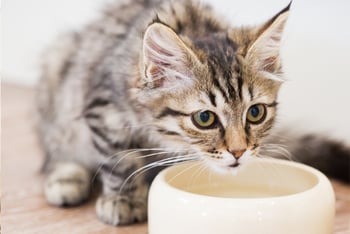 Depending on the symptoms with which the cat comes to the vet, the vet will take appropriate measures to find the cause of the illness. This may include a blood and/or urine test, X-rays or an ultrasound examination. Sometimes, however, a quick glance by the vet is enough for him to recognize, for example, that the cat is clearly overweight. Even if it is not visually disturbing, being overweight has a noticeable effect on the cat.
For sick cats, the administration of a special food can lead to a significant improvement in health. animonda has developed INTEGRA PROTECT, a comprehensive range of diet foods for cats that can be used for the following diseases:
- Chronic kidney disease
- Diabetes mellitus
- Urinary stones (struvite and oxalate stones)
- Acute diarrhea (gastrointestinal problems)
- Food intolerance
Cats with chronic kidney disease
The kidneys are extremely important organs that produce urine, which is used to remove waste products from the body. The kidneys can become acutely and unfortunately also chronically ill. Prolonged (chronic) damage to the kidneys can be caused by an infection, inflammation of the kidneys or a tumor, for example. As the kidneys can compensate for the slow loss of their tissue for a very long time, clear symptoms, such as increased drinking and urination (accompanied by frequent visits to the litter tray), only become apparent in the advanced stages of the disease. If the cat is treated quickly, the symptoms subside. Unfortunately, the lost kidney tissue does not regenerate. Early detection of this disease is therefore very important and should be part of annual examinations from a certain age. As chronic kidney disease mainly occurs in older cats (from the age of 7), they should be regularly examined by a vet. The earlier kidney disease is diagnosed, the more effective the treatment can be. In addition to medical therapy, a dietary food with a reduced protein and phosphorus content must always be given. With a special kidney diet, sick cats can live to a very old age.
Sick cat: Diabetes mellitus
If the cat's pancreas no longer produces enough insulin, blood sugar levels rise and the metabolism in the cells becomes unbalanced. The cat is diabetic. There are many reasons for this. For example, infections, damaged pancreatic cells and obesity can trigger diabetes mellitus in cats.
This is particularly noticeable through increased drinking and urine output. If diabetes is suspected, a vet should be consulted immediately to determine the sugar level in the blood. Diabetes is treated by administering insulin, which must be injected. In addition, a special food with a high protein content should be fed. Both together lead to a reduction in the blood sugar level. If diabetes is detected early, treated consistently and an overweight cat loses weight, the diabetes may disappear again.
Urinary stones in cats
The lower urinary tract of cats is very sensitive and can quickly become diseased. This can be triggered by urinary stones, especially struvite and calcium oxalate stones. Struvite stones in particular form when (normally dissolved) minerals accumulate in the urine. The cat owner should suspect a urinary tract problem if the cat visits the toilet more frequently than usual, is visibly unhappy, meows and there is blood in the urine. As cats suffer from severe pain, the vet must be consulted quickly. Once a diagnosis has been made and the type of stone has been determined, treatment is initiated depending on the type of stone. Struvite stones are treated differently to calcium oxalate stones. Calcium oxalate stones usually have to be removed surgically, whereas struvite stones can be removed or dissolved using ultrasound and a special dietary feed.
The use of a dietary feed is considered an important cornerstone in the treatment and prevention of these types of stones. A dietary feed for the prevention of struvite and calcium oxalate stones is characterized by a balanced mineral content. This content influences the pH value in the cat's urine and differs depending on the type of stone. For struvite stones, the pH value must be below 6.5, while for calcium oxalate stones the pH value should be above 6.7. Water intake is also important. There should therefore be at least 2 water bowls per cat. A drinking fountain can also encourage the cat to drink.
Cat with acute diarrhea
Sooner or later, every cat owner will be confronted with the problem of their cat suffering from diarrhea. This is not a disease, but a symptom that indicates problems with the gastrointestinal tract. Diarrhea should not be underestimated, as the cat can lose a lot of fluids and minerals. If the condition does not improve after 24 hours, a vet should be consulted. So that the cause of the diarrhea can be found quickly, the vet will want to know, among other things, whether the cat has been dewormed, what is being fed, how long the diarrhea has been going on and what the consistency of the stool is. If the cat's general condition is not further impaired, it is advisable not to give the cat any food for a day. Water should be offered in small amounts throughout the day. If the diarrhea has disappeared after 24 hours, an easily digestible food should be given. It should primarily contain highly digestible animal proteins and little fiber.
Food intolerance in cats
In the case of food intolerance, the cat's immune system reacts very strongly to proteins in the food. This can occur from one day to the next. It is now important to find out which protein is causing the allergy. The diagnosis is therefore made exclusively through an exclusion diet. To do this, a diet with animal and vegetable protein should be selected that the cat has never had contact with before, or only to a small extent.
This diet adapted to the cat should lead to the symptoms disappearing. Special diet foods with only one animal protein source are available for this purpose, which must also be listed on the product.
For an elimination diet to be successful, the cat must unfortunately give up all snacks and treats.