

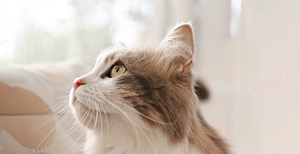
The Siberian cat is a naturally evolved cat breed from the far north. It is self-confident and agile, but can also turn into a cuddly cat in the blink of an eye.
Profile of the Siberian cat
- Size large
- Weight cat: approx. 5 kg, male cat: approx. 7.5 kg
- Origin Russia
- Strong build, female cat more delicate
- Coat length semi-long
- Coat color all except points
- Coat care medium
- Behavior agile, self-confident
- Character clever, people-oriented
Appearance and character of the Siberian cat
A Siberian cat is extremely imposing. Although it is a little smaller than the Norwegian Forest Cat, it can easily compete with it in terms of its coat. It develops a very dense and voluminous coat, especially in winter. Then it wears a stately ruff and knickerbockers, which means a particularly plush coat on the upper hind legs. The tufts of hair on the ears are also striking. Although these are not required by the breed standard, they are certainly desirable. They emphasize the natural look of the Siberian cat. It is also fitting that there are no special color specifications regarding the eyes and coat. Virtually any color is permitted. However, a distinction is made between cats with and without points. A true Siberian may not have any points, i.e. color-contrasting fur on the ears, face and tail tip.
Pointed markings are reserved exclusively for her sister cat, the Neva Masquarade. The permitted pointed color varieties are seal, blue, red, cream, seal/blue tortie, smoke, tabby and/or silver/gold. In most clubs, the Neva Masquarade is regarded as a breed in its own right, some only list it as a special color variety. With the exception of the coat pattern, both have exactly the same breed standard. This states that it is a medium to large breed, with females usually smaller than males. Their body is well proportioned, the head massive and the eyes large.
In terms of character, the Siberian cat is both wild and affectionate. It can be a real outdoorsman who is self-confident, goes hunting, knows how to defend itself and makes known what it doesn't like. But that is only one side of the coin. The Siberian cat is by no means a loner who doesn't let people get close to her. It also needs affection. She gets her daily cuddles when she feels like it. She enjoys this to the full, but as is the case with cats - when she has had enough, she gets up and looks for another place to cuddle.
Siberian cat: keeping and care
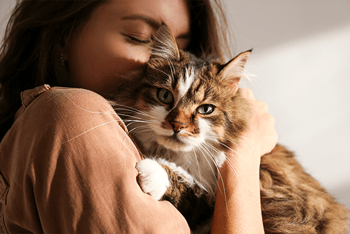 The Siberian cat is uncomplicated to keep and makes a very good family cat. However, you shouldn't expect them to be a reserved and quiet breed at all times. Originally it was - and still is - a domestic cat from northern Russia. Just like our house and farm cats, some of them still have a lot of energy. If they have access to the outdoors, they like to demonstrate their stamina and agility on the hunt. But not everyone can or wants to let them out. Perhaps a cat-proof garden or balcony can be implemented. Otherwise, however, it is enough for them to be provided with sufficient variety within their own four walls. This should include a ceiling-high scratching post, cuddly caves and all kinds of toys . It would also be ideal to have a companion who is available day and night for mischief and socializing. In addition, you also need to take care of them yourself: the Siberian needs enough attention every day to be happy.
Grooming is not complicated, but should not be underestimated. Large amounts of hair accumulate, especially during shedding periods. If the cat is an outdoor cat, some of the fur is shed outside. But even then it is important to use a comb or brush regularly. This makes it easier for the cat to change its coat and minimizes the risk of it swallowing too much hair during washing, which could cause a problem in the gastrointestinal tract. It can also prevent the coat from matting.
Nutrition
Whether kitten, adult cat or senior - the food for a Siberian cat should always be of high quality and adapted to its age. Cats are carnivores by nature, so the cat food should contain a high proportion of meaty ingredients. Sugar, flavor enhancers and artificial colors and preservatives should not be added to the food.
animonda offers the right food for every stage of your cat's life. Choose between kitten, adult and senior food. The products are specially formulated to meet the particular nutritional requirements of the different life stages of cats. This creates the best conditions for a healthy and long cat life.
Health of the Siberian cat
The Siberian cat is a natural breed that is largely spared hereditary diseases. To ensure this, responsible breeders have genetic tests carried out on all breeding animals and exclude diseased cats from breeding. Therefore, if you are interested in this cat breed, look for a reputable breeder who can prove his commitment by means of health papers.
Despite preventive health care, diseases can occur. One of these is polycystic kidney disease (PKD). Cysts form on the cat's kidneys. A complete cure is not possible, but the disease can be treated and delayed with medication.
Another hereditary disease that can occasionally occur in Siberian cats is the heart disease HCM (hypertrophic cardiomyopathy). This causes the wall of the heart to thicken, making the interior smaller and less able to hold blood. This leads to accelerated breathing and fatigue. HCM can be diagnosed by ultrasound examination.
History and breeding
The Siberian cat has lived in Russia for centuries, especially in Siberia, which gave it its name. It is the counterpart to our domestic and farm cats. Their job has always been to hunt mice. However, as the temperatures in Siberia are significantly lower than in Germany, she has grown an extremely thick coat. So if you have an outdoor cat at home, don't be surprised if she wants to go outside even in the depths of winter. She doesn't mind the cold. She is perfectly protected by her double-layered coat. As her undercoat does not lie flat, it looks particularly voluminous and is a real eye-catcher. This is certainly what many visitors thought at the world's first cat show in London in 1871, where the breed - or rather its predecessor - was introduced to the western world for the first time.
The Siberian cat came to Germany via the former GDR. The first animals appeared there in 1985 and the breed began to be registered and bred. In 1992 it was recognized by the World Cat Federation and in 1996 by the European umbrella organization FiFe.